Hello, my name is Marian. This is the story of how I went from being an anxious, fearful individual with an array of debilitating physical symptoms, to living a full, rich life no longer controlled by anxiety or its limitations.
Content warning: The following section mentions severe anxiety symptoms, but only to highlight my recovery from them. Please skip ahead to January if you find this part triggering.
My experience with this condition was unlike anything the term ‘anxiety’ could fully describe. Over time, I came to understand that elements of PTSD were also intertwined with my journey. At the end of 2021, I was off from work, struggling to leave my house, I awakened every morning to an instantly racing heart, hyperventilation, and a sense of dread that something awful was going to happen to me. Every night for months, as soon as my head would hit the pillow, waves of adrenalin washed through my body. I could feel it pumping through my veins, shooting up and down like electric shocks leaving me unable to sleep for sheer panic. I was sleep deprived. My range of activity for each day was dictated by a fear of leaving my house (agoraphobia) and my world gradually got narrower and narrower. I very quickly became so withdrawn and exhausted that I couldn’t do much, see anyone or go anywhere.
Between July and December 2021, I tried anything and everything to get better. I bought loads of supplements, worked with a nutritionist from the London College of Nutrition, made loads of dietary changes, detoxes, mindfulness practices, breathing techniques, massages – you name it, I tried it. Nothing made a lasting difference, and my symptoms just kept getting worse.
Symptoms began to spiral and included: Postural Orthostatic Tachycardia Syndrome (POTS), chemical and food sensitivities, tachycardia, joint pain and migraines after every meal, full body twitches and spasms, brain fog, memory problems, daily panic attacks, blurry vision, chronic nausea, 30-pound weight loss, dizziness, gastrointestinal issues, electromagnetic sensitivity, temperature dysregulation, light and sound sensitivity, internal buzzing sensation. These symptoms were present at all times – either shifting, merging or alternating 24/7. It is honestly hard for me to remember them all and I know I am missing some.
By August 2021, my symptoms had escalated to the point where I ended up in A& E at UCLH, where I underwent a full range of blood tests and scans including a head MRI. All tests came back clear, and doctors believed I was suffering the effects of ‘brain trauma’. I didn’t believe that this could all possibly be a stress response, so I just kept probing doctors about a variety of other conditions. I was so desperate for an answer that I wanted the doctors to find something physically wrong with me, just so that I could label it and get better. I was sent home with blood pressure medication and a range of specialist referrals to rule out autoimmune conditions.
The list of strange sensations went on and on and continued to grow. Every time I experienced one, it would scare me. I’d go back to the doctor, over and over again, desperate to figure out what was going on, and always got the same diagnosis: “We can’t find anything wrong with you” How could I feel so terrible and yet have everything be normal? I had no choice but to go home and try to cope.
I had bible scriptures on post-it notes on my wall, and I drew strength from verses such as Philippians 4:19 Msg: “You can be sure that God will take care of everything you need, his generosity exceeding yours in the glory that pours from Jesus”
I began to worry that my doctor, and the specialists I’d been referred to, must have missed something because everything they’d suggested didn’t work. Maybe I had an undetected illness. Surely, anxiety couldn’t be the cause, not with symptoms this severe and persistent.
It was a horrible time for me – it was also tough on my friends and family, who had watched me turn from a happy and optimistic person into a withdrawn and frightened individual. Friends and family kept checking in on me; they tried to be there for me in the best way they knew how. I kept thinking ‘How did I end up here?’ As a Social Worker, I led a training for carers on trauma-informed parenting to help children feel safe and heal, including the effects of trauma on the brain. I felt I should have known better.
In December, I was diagnosed with Chronic Fatigue Syndrome by my Immunologist. He was also of the view that it was severe stress response I was experiencing, and said he felt confident that I’d find my way out of this. This further motivated me to find the answers I needed, even if my doctors couldn’t lead me to them.
Initially, the anxiety was so severe that I couldn’t read a book, or focus, never mind hold a long conversation. But eventually, I started spending hours just reading and researching, and my tenacity paid off.
In January 2022, I found my answer in the form of brain neuroplasticity programme: Dynamic Neural Retraining System (DNRS) developed by Canadian counsellor, teacher and journalist, Annie Hopper. It’s a drug-free, self-directed brain retraining program, which uses the principles of neuroplasticity to help reverse limbic system impairment (responsible for the fight-flight reflex of the brain) and to regulate a maladapted stress response involved in many chronic health conditions such as Long Covid, Fibromyalgia, Chronic Fatigue, digestive problems, multiple chemical sensitivities, Lyme disease, POTS, anxiety and so on.
Neuroplasticity simply refers to your brain’s ability to change. The purpose is to change your brain’s response to stress and thereby allow your body to heal from many of the health issues connected with a chronic stress response. It does this by building healthier neural pathways that support optimal health and wellbeing. The more we do something – like learning a new skill or forming a habit – the stronger these pathways become. As I started new thought patterns and new ways of thinking, and practiced this repeatedly, my brain started making physiological changes and creating new neuropathways.
A few days in, I knew this was a game changer. The daily panic attacks ceased almost immediately. I learned that I could focus my attention where I chose regardless of external circumstances, symptoms or internal thoughts or feelings. I began to experience a sense of mastery over my thought life that I hadn’t had for years because of anxiety linked with the pandemic, lockdown, a break-in at my home, working as a key-worker throughout the pandemic, losing one of my best friends to cancer in 2018 and a few other traumas. My DNRS practice also reminded my brain what it felt like to feel good. I learned to really treasure the beauty in my surroundings, remember pleasant experiences and to focus on positive thoughts; it created an expansiveness in my mind.
I walked this journey with my Swedish DNRS practice buddy, Tove, who is making a recovery of her own. We connected on a weekly basis and did our buddy rounds via Zoom. I was reassured to meet someone who was dealing with the same issues as I was! It helped motivate me to keep going on days when my hope was low, and our weekly buddy rounds was something I looked forward to every week.
In February, I came across the books ‘Hope and Help for your nerves’ by anxiety pioneer Dr Claire Weekes, ‘Dare’ by Barry McDonagh and ‘A Life At Last’ by Paul David. Dr Weekes’ strategy with panic is – face it, accept, float, and let time pass. DNRS had been suggesting this, however for some reason it only really clicked when I read the first pages of Dr Weekes’ book. It was as if she was speaking directly to me. Her account of anxiety was unlike anything I had ever read or been told. Her words explained my experience so perfectly that I couldn’t put the book down. This is what sealed the deal for me. I found it at just the right time in my healing journey, and from that moment on it felt as if my recovery had been supercharged.
For the first time, I properly understood the mechanics of anxiety. By making life bigger than my symptoms, fear diminished and anxiety totally lost its power over me. I could allow the alarms to ring wild without ruminating or obsessing. I went back to living my life and took my symptoms with me. Every time I went for a walk- “hello anxiety, would you like to join me on a walk today?” or “take a seat I’m glad you showed up”. When anxious thoughts about my health came, I let them in, observed them bouncing around, let them roar and shout if they wanted to. They were just forms of energy needing an outlet, they held no importance and I attached no narratives to them anymore. I developed the attitude of: “whatever I am feeling, I am feeling, and that’s okay. It is what it is”. With this I allowed the anxious energy to flow through me rather than being in a constant battle with it.
So, give yourself permission to feel what you’re feeling without judgment or resistance. Trust that it’s okay. You’re okay, and it will pass. You don’t have to fight the anxiety, just let it be, and let it go when it’s ready.
Slowly it got better and better, and clear days became longer and more frequent. Symptoms were still present, but I didn’t allow them to dictate my life. I stood at the shore, the tide ebbing and flowing, the surf running over my feet and tugging at my legs. But unlike before where I’d simply go with the tide like the rest of the driftwood, I now planted myself in my own moorings.
Spending time with friends in public spaces was one of my first challenges, and my gosh, was it a challenge! Everything was telling me to run the other way. I just kept sending the same message to my brain that I was safe by not avoiding triggering situations. I would be here all day if I went through all the challenges that I set myself, but I worked my way up slowly. My symptoms would go wild as soon as I decided to do something, trying to tell me to stay at home. But I just gave the ‘so what’ attitude (barely believing myself at times) and did it anyway.
In March, I joined a gospel choir called London International Gospel Choir (LIGC). I knew singing always gave me a huge amount of joy. I’ve always had a passion for singing, and this gave me the perfect opportunity to combine it with meeting new people. Singing in a choir also has the benefit of building friendships and connectedness, and it’s just a fun way to spend your free time. After each rehearsal, I could feel the volume dial on my symptoms turning down slightly, and my energy levels improving. I began spending more time out of “fight or flight” mode, which was such a breakthrough and all because I was back to doing the things I loved.
Today, my brain’s protective system is back doing what it’s supposed to be doing; on stand-by recognising what is and isn’t a real threat. It understands that I’m not being chased by a bear….
I’m enjoying life on a beach.
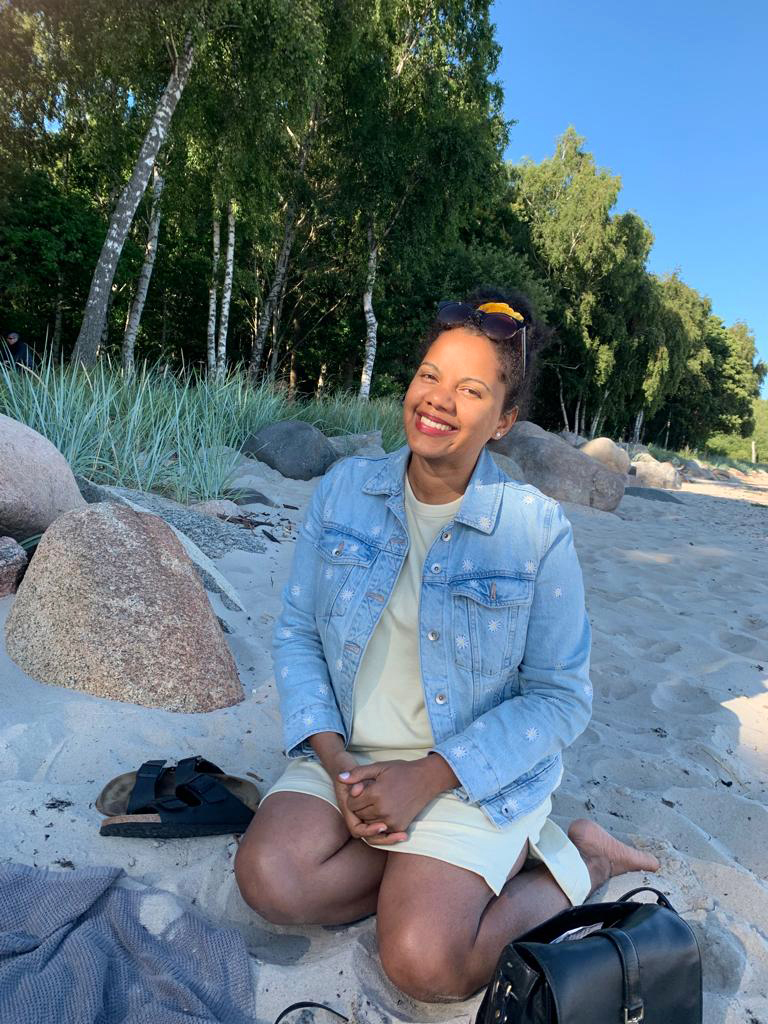
I could never understand when people said that they are grateful for their ‘perfect storms’ that led them into spiraling anxiety symptoms, but I’m starting to get it. It has taught me profound lessons I may not have learned in any other way. Many things that used to bother me simply do not affect me anymore. Life is precious, and I only have one chance to truly live it. Life is unpredictable, and we can’t control everything, but we can control how we respond. Each moment is fleeting, and spending it in fear or worry wastes time that we’ll never get back. Each day is an opportunity to start afresh.
I continue to heal from things that have surfaced throughout this process, as the layers continue to gently peel away. But I am back to enjoying a life that I Iove; I’m back at the gym, I work, travel, spend time in nature, sing and write, socialise with friends and so on. I no longer have debilitating symptoms. I do what I want, when and where I want. My emotional state has completely transformed.
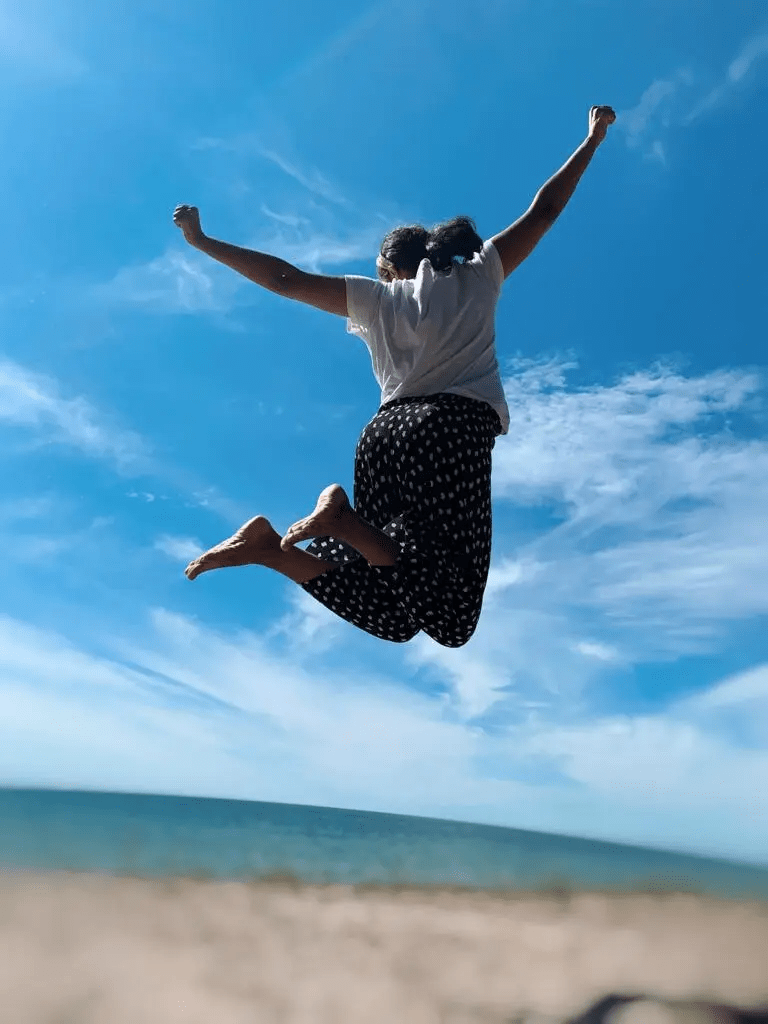
If you’d told me last year, what I’d be doing this summer, I wouldn’t have believed you in a million years. What once felt like a completely overwhelming experience, gradually lessened over time, until now, all that remains is an echo reminding me of how thankful to God I am for my life.
With the right approach and understanding, the length of time it takes to recover from an anxiety disorder can vary from one person to another and can depend on many factors. Someone’s recovery path might look very different from mine, and their relationship with medication might also look different. For me, personally, I was worried that medication would become a crutch, so I never pursued this route, although my doctor offered it. There is a lot of unhelpful stigma around medication, but it can provide lifesaving relief to enable a person to regain enough strength to focus on getting better.
Below is a summary of the things that helped me recover:
- Brain retraining – Dynamic Neural Retraining System: https://retrainingthebrain.com/understanding-the-science/ Please note that DNRS is not intended to replace emergency, medical, or mental health services. However, I think it offers suffering individuals something truly unique and effective.
- Books: ‘Hope and Help for your Nerves’ by Dr Claire Weekes, ‘Dare’ by Barry McDonagh, ‘A Life At Last’ by Paul David, ‘Wired for healing’ by Annie Hopper (DNRS)
- Anxiety No More: Anxietynomore – Dedicated to helping sufferers of Anxiety
- Recovery story: https://www.youtube.com/watch?v=RJYB2B0kqUw&t=415s
- Last but not least, build a support system around you. With this, your daily struggles will become that much more manageable.
If you’re struggling with anxiety or PTSD, I encourage you to never give up. Mine is a story of applying faith, courage, consistency, brain science, and an unquenchable desire to overcome this condition. I was once you, and I can assure you, from personal experience, that you can get well again, and live a life that you love.
I tell my story to strengthen your faith.
Sending you love and strength.
Marian


Leave a Reply